
Rick McBee's Writings
Explore the magic of new ideas and books to read as well as see what books I have written, my favorite photos, my opinions on may subjects, including Science, Africa, the Caribbean, the Civil War, my Book Reviews, and Much More!
Book Review: The Feather Thief, by Kirk Wallace Johnson

The Feather Thief: Beauty, Obsession, and the Natural History Heist of the Century by Kirk Wallace Johnson
My rating: 5 of 5 stars
An absolutely amazing book! Here we have a three part well written book that gives one of the best pictures of the consequences of rampant human greed in the past from the historical perspective and in today’s obsessive cult-like behaviors as seen in the decorative fly tying world. I enjoyed ever facet of author Kirk Wallace Johnson’s journey as he went back into the early days of trout/salmon fly tying and documents the similarities and differences of making flies used for the different fish. I loved his descriptions of the epic journeys of the obsessive biologist Alfred Russel Wallace. The failures, successes and the conclusions he drew from his collections which paralleled those of Charles Darwin as to the origin of species. Then in Part II of the book, Johnson recreates and elucidates for us, from court and police documents, as well as interviews with numerous acquaintences, the 2009 theft of some of the rarest bird specimens on earth from the British Museum of Natural History in Tring, England. Following the theft and eventual capture of Edwin Rist for the crime. the author gives us excellent insight into the workings of the British system of justice and the kinds of pleas that can bring conviction or dismissal in such a case. This was simplly amazing to me. Finally in Part III of the book, the author does his best to follow up on the still hundreds of missing bird skins and feathers that are obviously still floating around the world within the fly tying community. Again an eye opener as to the methods of investigation, internet sleuthing and the closing up of ranks within the fly tying cult and rationalizations made to justify those who continue to deal in illegal feathers. All in all, I think anyone ages 15 through 90 would enjoy this book. A great one for a serious discussion on the whys and wherefores of the values that are portrayed by all concerned in the making of this work of art. Read, enjoy and discuss, you’ll love it!
View all my reviews
Book review: The Enemy, by Lee Child (Jack Reacher Series #8)
The Enemy by Lee Child
My rating: 4 of 5 stars
Lee Child as always does a great job of opening and closing a book. This tale fills us in on a lot of Jack Reacher’s life prior to departing the military for his walk-about stories. The stage for the story is set with a seemingly routine death investigation that then leads into a murder that is in no way on the ordinary scale. Reacher gets a strange transfer from a seemingly important foreign site job to an out of the way station for no apparent reason and soon finds out that a whole lot of his colleagues have also been transferred. Something is brewing in the higher echelons of the military and the MP commanding officers are being spread out in strange posts. Reacher disobeys a direct order from his commanding officer in order to follow up on leads that will eventually reveal how his commander is mixed up in a very complex scheme of murder and control of the new military order that is coming down the pipeline in the next few years. I recomment the book for readers who want to know a bit more about how Jack Reacher thinks and the quirks of his personality that bring him into conflict with higher authroities and ultimately lead to his leaving avtive duty. The book is a bit wordy in the middle with side stories that are unrealated to the overall central story of the book and don’t require the number of pages devoted to them to get across the message. I felt the book jumped hither and yon a bit too much. There was a bit too much of forging commanding officers signatures and jumping of the plane at a momnent’s notice, but it’s a good read and certainly a great escape novel for travelers or those on vacation in between more adventurous things like scuba diving. Enjoy once again a book written by a master of the genre.
View all my reviews
The Bomber Mafia, by Malcolm Gladwell – A Book Review
The Bomber Mafia: A Dream, a Temptation, and the Longest Night of the Second World War by Malcolm Gladwell
My rating: 4 of 5 stars 
How big of bombs, and how many of them are necessary to win a war? Will Bombing civilian populations lead to the capitulation of an enemy and end a war sooner than targeted bombing? These are some of the questions this historical book: “The Bomber Mafia” brings to light.
Author Gladwell has taken a single theme, the Norden Bomb Site, and given us an excellent set of historical data that show us how far our technology has advanced since WW2 to give accuracy in bombing runs and instances when we would like to have pinpoint accuracy for the delivery of an explosive device that can take out anywhere from a single person ot a factory to a city to a sip on the high seas. All these things which we can do today, almost with impunity, were impossible during the second world war. The bomb site gave the American Air Corps the false illusion, for a period of time on both the Eastern and Western Fronts of the war, that pinpoint accuracy during daylight bombing raids could be achieved, and thus be more effective in knocking out the enemy’s ability to wage war. In the end on both fronts, the delusion had to be overcome by hard headed pragmatism of what our early air corps was capable of acheiving. In many ways the author tries to show how the idealists who wished to lower the collateral damage on civilians and the loss of innocent lives, finally lost out to the need to do broadcast bombing and the creation of firestorms, starvation and famine within opposing nations to achieve a victory in a major world conflict. it brings to light some discussion questions which still exist today and have not been answered, including the question of: How can we contain war to keep it small enough so that a victory can be acheived and the war doesn’t blow up into a world wide conflict that will kill hundreds of millions of people. Is it possible, or are we just postponing the inevitable which may be more deadly in the future than if we went all out in the present. Perhaps there is no “right” anwer.
View all my reviews
Book Review: Mayflower by Nathaniel Philbrick

Mayflower: A Story of Courage, Community, and War by Nathaniel Philbrick
My rating: 5 of 5 stars
Over one hundred years before the Revolutionary War, the pilgrims and the other settlers along the Massechusets colony along with the Puritans were just finishing up with a twentyfive year war with the Native American Indians known as “King Phillip’s War”. It’s a war I never hear about, and the lead-up to that war, as described by renowned author Nathaniel Philbrick, tells a completely different story of the Pilgrims and their settling along Plymouth coast from the one that I and many North Americans were taught during our upbringing. It begins with the fascinating tale of a religiously conservative group of English Protestants who are outcasts in their Roman Catholic governed nation. Their flight to Holland, then back to England and on to the Colonies in 1616 to 1620 gives us a picture of a tighly knit religious sect of Christianity whose members were completely unprepared and unaware of the challenges they would face in getting to and upon arrival in, the New World. The well researched opening tale drew me into the story and even then, I was unprepared for the kinds of hardships of cold, hunger, and disease that these folks would encounter upon reaching the wild coasts of the North American continent and simply trying to find a place to land, build a small stockade and weather the first year near starvation. The understanding that the first contacts with Native Americans were far from cordial took me by surprise. The fortunate outcome of some complex negotiations between the two peoples with vastly different world views wold not have happened save for the appearance of Squanto. We see how Squanto’s years as an English captive, coupled with his ability to persuade Massasoit, a revered sachem of the greater Wampanoag peoples probably saved the Pilgrims from a similar fate of several previous attempts at American colonization which had resulted in the wiping out of the entire colony. Thus almost two years after their arrival in the New World, the Pilgrims are able to have a blow-out feast with the native Indians, which has come down to us today in what we call Thanksgiving. Author Philbrick has again done an amazing job of enlightening us about a little known piece of our history that should take it’s place in numerous classes and on our bookshelves as we learn and teach about our own country’s past and the local and immigrant peoples who worked and fought each other to make it what it is today.
View all my reviews
Book Review: From the Center of the Earth (Stories out of the Peace Corps) edited by Geraldine Kennedy
From the Center of the Earth: Stories Out of the Peace Corps by Geraldine Kennedy
My rating: 4 of 5 stars


This excellent 13 story compendium of a variety of Peace Corps Volunteer stories, tales and activities gives a broad picture of how varied the Peace Corps experience can be. Much depends on where a volunteer serves, what job they are assigned to, and the local people with whom they work. Often the experience is tied into the individual’s growth and maturation as their inventiveness, and ability to stick it out when the going gets tough is tested on a daily basis in situations where thee is no backup or support during the random chaos that attends life in the bush, city, or slums with transport, disease or civil authorities in over 60 developing nations, worldwide. Every volunteer’s stint in Peace Corps is different. My own story and experience in Peace Corps intersects with the 1966 era tale told on page 169 by Mary-Ann Tirone Smith, in West Cameroon. I can empathize deeply with that tale, although my experiences there were as vastly different from hers as were the six miles of tropical rainforest that separated our postings. Definitely a book to read for those who would still have that urgent desire to cut the reins and go “out there.” These are the tales born while doing “The toughest job you’ll ever love.”
View all my reviews
Book Review: Evan Help Us by Rhys Bowen

Evan Help Us by Rhys Bowen
My rating: 4 of 5 stars
One of the nice things about reading one of Rhys Bowen’s Constable Evans books is that you pick up a lot of Welsh country lore. When a book is set in a tiny inbred village where half of the people are cousins and may have the same surname if not the same first name, it becomes important to identify personalities by their tasks in the village so it can be Evans “the butcher”, or Evans “the policemen” that distinguishes the characters rather than some unique first and second name as seen in the more cosmopolitan parts of the British Isles. Of course, this also means that outsiders like Annie Pigeon and Ted Morgan are always objects of comment and perhaps suspicion when it comes to murder and solving the mystery. I certainly enjoyed the easy read about the tiny village of Llanfair nestled in the shadows of Mt. Snowdon. Pay attention to the characters, the culprit can be deduced from the story, but it’s a canny novel.
View all my reviews
Book Review: RESOLUTION by Robert B. Parker

Resolution by Robert B. Parker
As you can see from this review, I have had two books going at once, the serious History from WW2 in “Sea Cobra as reviewed by me in my last posting and by bedtime story reading which is generally an escape from the real world in order to have sweet dreams. So here is your recommended next bedtime story for “those trying times”.
Resolution, a town just waiting to be taken over by someone who feels the need to own their world. A fellow named Wolfson owns the Blackfoot Saloon and has that kind of ambition. But of course he needs a little more back-up to accomplish his life goal. So when Everett Hitch rides into town looking for a place to rest his saddle sores, Wolfson hires him right then and there to be the saloon lookout and keep the peace, there being no marshal or sheriff within a day’s ride. It’s a typical set-up for a former West Pointer and Civil War veteran with a Wells Fargo background. Hitch sits in the high chair cradeling his sawed off eight guage and watchs the fun, until it isn’t. Then Hitch makes his point about where the power in the saloon sits. After a set-to with a local gunney, it’s only a matter of time before some power struggles take place between the local miners and their boss, the homesteaders arriving to take over new land, the cattlemen and of course the man who really wants it all, Wolfson. Wolfson begins to hire more gun slingers so about this time Hitch’s friend and partner in legalized crime, Virgil Cole arrives. As locals are shot or run out of town and gangsters brought in by Wolfson take charge of the town it becomes time for a bit more law and order to protect the common citizen. Virgil and Everett eventually have to take a stand with the local citizenry to stop a man who will only respect the law of the gun to check his greed and averice.
Once again, Author Robert B. Parker, R.I.P., has written a fast reading book that is just what you need to end the day’s worries and anxietes about the world we live in. Enjoy the ride, Virgil Cole still hasn’t been beaten when it comes to a shootout. That’s why he keeps coming back.
Book Review of Sea Cobra by Buckner F. Melton Jr.
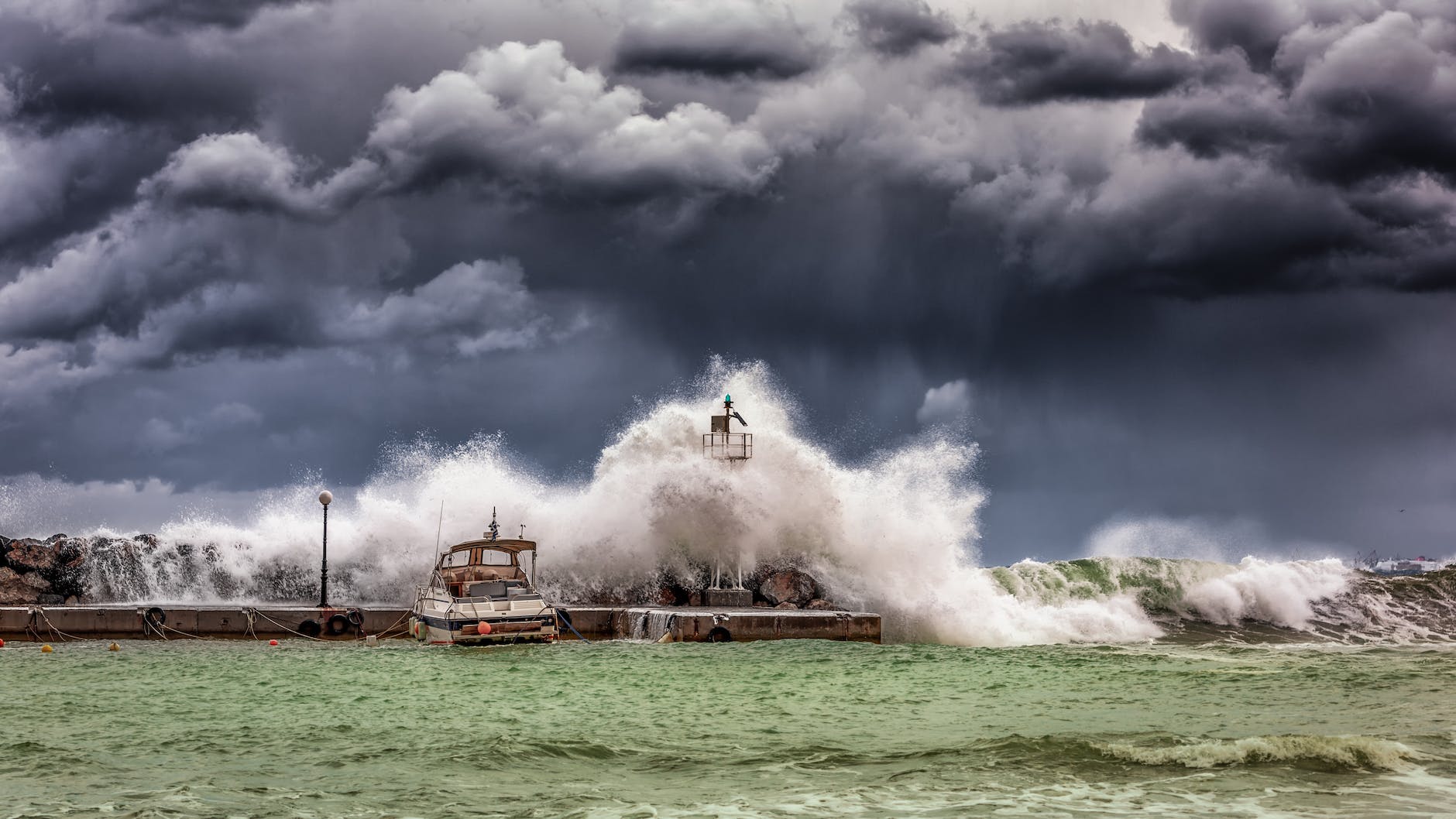
Sea Cobra: Admiral Halsey’s Task Force and the Great Pacific Typhoon by Buckner F. Melton Jr.
My rating: 5 of 5 stars
If you want to understand the power of a Mother Nature when she comes at you with the fury of a Typhoon, then this is the book that really sets forth the whole picture in a well laid-out fashion for those of us who are not hardened sailors as well as for those who may have captained or voyaged on their own ships through major storms. Admiral Halsey was already a seafaring legend by the time he took his task force 38 north from the East Indies to support General Douglas McArthur in his 1944 invasion of the Phillipine Islands. Yet weather predictions during that time in history were hardly much better than they had been back at the time of Admiral Nelson, some one-hundered and fifty years previously. In fact, the addition of modern radio transmissions and the infantile profession of weather predictions in 1944 actually put Halsey’s military task force at a disadvantage with regard to some foul weather because reliance was placed on distant transmissions of fragmentary information from Hawaii and Guam, to Admiral Halsey more than a thousand miles away. Thus, instead of relying on the local wind direction and the fact that the local barometer reading was falling very rapidly, the weathermen aboard the Admiral’s fleet chose to predict that a major typhoon was hundereds of miles away when their old fashioned charts would have indicated a severe storm in under 24 hours. Consequently, the efforts of the fleet to avoid the storm resulted in their passing almost directly into its center. The descriptions of the damage that was done to Admiral Halsey’s destroyers, battleships and aircraft carriers and their superstructures is almost beyond comprehension. Author B.F. Melton Jr. has taken original reports from the commanders of the various ships, the survivors of sinkings and the final navil inquiry into this naval disaster and let the facts speak for themselves rather than trying to be an armchair admiral. Totally engrossing reading and lessons for the modern world about remembering how to use old fashioned technology when the modern techno-world fails us.
Book Review: The Teenage Brain by Frances E. Jensen, MD with A.E. Nutt
The Teenage Brain: A Neuroscientist’s Survival Guide to Raising Adolescents and Young Adults by Frances E. Jensen
My rating: 5 of 5 stars
Here is an book that should be required reading for all Parents at the point their children are reaching the age of about 12 and certainly before they really hit their teens! Author Jensen who is a single mother as well as a neuroscientist tells it like it is, worldwide with the development of the teenage brain, key information to know about how your child’s learning, emotiions, sleep habits and risk taking will change as that childhood brain which you thought you had so well trained, clicks into a new growth spurt of neuron growth and connections that in a period of approximately 6 years will change you adolescent into a largely functional adult – OR NOT! The temptations that arrive with sexual development and awareness, peer group emotional stresses, the pressures of society and the internet world of Facebook, Twitter, TicTok and online gaming, to name a few are mind boggling. Parents need to be aware of how the developing brain picks up on stimuli, how parents can best inform or share their own concerns and worries, how best to approach giving advice and when to seek help with a behavior that might be antisocial, violent, depressive, etc. I’m a retired biologist, teacher, secondary school principal and career educator. How I wish we had had, all of this knowledge over 40 years ago when I began my career and being married and having children of my own was raising them in my world of ignorance. Right to the final pages on sports, crime and punishment and movinginto adulthood, this book will keep you absorbed. It’s my pick for the best book I’ve read this year.
View all my reviews
In times of Unrest and Stress! Listen to a Captivating Music of “Ukuthula!” (Peace! in Zulu) Pronounced: “Ooo-koo-thoo-lah!” Then read my books!

Amazing! Ukuthula – Hlumelo’s Swansong! Performed by the Cape Town Youth Choir as part of STBB s 121 year birthday celebrations Solo by Hlumelo Marepula Conducted by Leon Starker Watch this great piece of music performed Ukuthula: https://www.youtube.com/watch?v=9C2fJKBmKFk
The Zulu Word “Ukuthula!” When shouted out by a melodious African voice and followed by ullulations from high pitched female voices or when sung by a youth choir epitomizes the feelings of reaching out to the world and others with words of Peace! Love! and Hope! Enjoy!
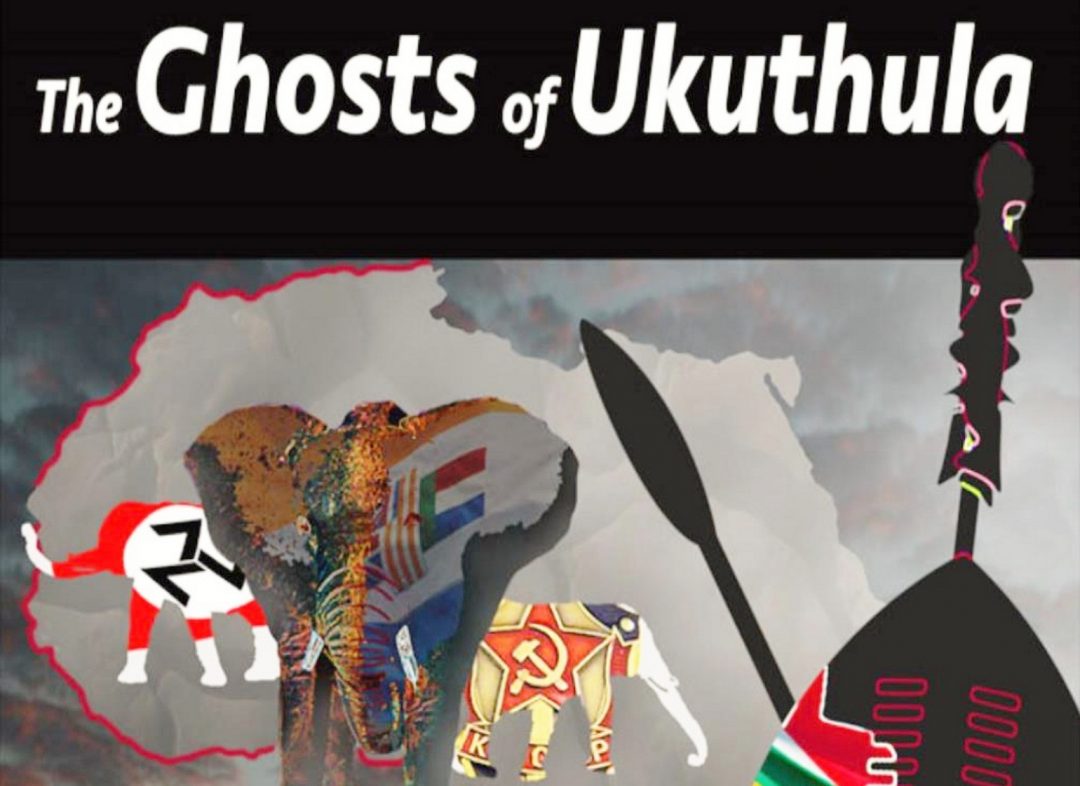
Here’s My Novel : An African Hero works towards Liberation and Peace in Southern Africa: The Ghosts of Ukuthula (pronounced like Ooo-Coo-Thoo-Lah! as in the song above)! Check out my author site Link ! https://www.amazon.com/stores/author/B001K8HIXI
Africa is predominatantly a Christian based society like the United States everywhere South of the Sahara. It also has a strong intellectual Muslim History from the Central Sahara which believed strongly in coexistence with Christian and Jewish Communities and published amazing works of thought which are written about in the Great Non-fiction book The Bad-ass Librarians of Timbuktu. If you haven’t read it, you really should.
We in our isolated American culture often forget that there are hundreds, if not thousands of other religious traditions throughout the world that have their own traditionals around the themes of childbirth, health, well-being, meditation, the winter and summer solstice, as well as thanksgivings for good harvests. which contrasts with the summer solstice in the Southern Hemisphere and the first fruits of the spring harvests. Look up world religions and you will find that every day in December has some sort of religious celebration!
All of these traditions focus on the celebration of Joy, Peace, Light, Freedom, Seeking the Devine, and Spiritual Awakening. Peace! Ukuthula!
<Rick McBee.me>
South Africa Book Group on Goodreads
.gr_grid_container { /* customize grid container div here. eg: width: 500px; */ } .gr_grid_book_container { /* customize book cover container div here */ float: left; width: 39px; height: 60px; padding: 0px 0px; overflow: hidden; }
 1557 members
This is a book club for all South Africans who love reading! We also have members from other coun...
Books we've read


View this group on Goodreads »
Share book reviews and ratings with South African Book Lovers, and even join a book club on Goodreads.
 Rick McBee's Writings