
Rick McBee's Writings
Explore the magic of new ideas and books to read as well as see what books I have written, my favorite photos, my opinions on may subjects, including Science, Africa, the Caribbean, the Civil War, my Book Reviews, and Much More!
Three Striped Hourglass Beefly – Another Cool Pollinator

Here’s a super close-up photo of another great non-bee pollinator that we need to protect in case Honey Bee Colony Collapse Syndrome wrecks our bee industry.
Hourglass Bee-fly – An Alternate Pollinator – Your Friend!

Here is a great picture of one of those flies you don’t want to kill in your house or garden. After all the honeybees have gone back to their hives or been killed off by the Colony Collapse Syndrome, this will be one of the little buddies of humans that we will need in order for our fruit crops to be pollinated for fruit to be formed. Go ahead and kill house flies, but if you find one of these in the house, trap it under a glass and take it outside and let it go. Our world needs these little work-horses of the flowers in order to survive.
Book Review: Fire Season!
A Man and His Dog in Fire Country
Fire Season: Field Notes From a Wilderness Lookout by Philip Connors is one of those relaxing airplane ride books or winter fireside reads that really lets you understand how being on a fire watchtower, miles from anyone else could be both exciting and soul refreshing. Solitude is something that many of us don’t get enough of anymore. At the same time, when the storms come in and Zeus starts throwing his bolts of fire and Thor hammers you from all sides, the Gods of old seem more than real, in fact, they are right there in the room with you and you cringe at their very power and being!
My buddy, Scott Fitch, who spent a number of summers on mountain tops with his hair electrified vouches for the truth of Conners’ words. Out in the Gila National Forest in a hundred square feet of fire tower there’s plenty of time to think and even go buck stark naked if you so choose as long as you keep the eyes peeled for those tiny whisps of smoke that are the telltale signature of Mother Nature about to break loose and go on the rampage at Apache Peak
Read it slowly. Marvel at the stories of the legends of firefighting and forestry conservaton. Ponder the silence and loneliness of a month on a mountain top with no visitors other than your dog. Understand the origins of our forest policies and the misinterpretations of how we should manage this vast wealth of our nation in the light of global warming and the buildup of tinder dry fuels in areas larger than the entire state of Massachusetts.
It’s a keeper!
Memories of Prinz Eugen Kaserne Duty 69-70
Memories of HHD 512th USA Arty GP in Gunzburg Germany: I was there from Dec. 1969 through Dec. 1970. The personnel office roster for that year at the Prinz Eugen Kaserne just outside of Gunzburg Germany was made up of CWO Leroy.C. Sweet, SGT Mendez, SP5 Richard McBee, SP4 Alan Lang, SP4 Pete Spera, SP4 Bruce Shoe and SP4 Robinson. See: http://armykaserne.com/us/prinz-eugen-kasernegunzburg/
I was assigned there when I came through Frankfurt after dropping out of Infantry OCS after the end of the fourth month (OC1 – 70: “OC One! Second to None” was our slogan. I decided I didn’t like the kind of guy I was turning into as a wielded sword man.). In the casual company in Frankfurt I got bored sitting around waiting to be assigned, so I walked into the personnel office and asked if they had any place in the medical corps that I could be assigned since my background was in Biology. They said no, but could I type. I said I knew where to put my fingers on the keys because I had one class in typing in High School, so they called up the Det. in Gunzburg and I got assigned as the new Officer Records Clerk for all the 512th SASCOM Detachments in early Dec., of 1969. See Gunzburg at : http://www.itcwebdesigns.com/tour_germany/guenzburg.htm
When I arrived in Gunzburg, in December, the fellow I was replacing, named Sp5 Larry Hicks, had almost the same history as me and he sold me his old (really old) VW and also talked to the land lady who had his apartment in the town of Gunzburg with his wife and they agreed to rent the place to me after he rotated out at the end of January. They put me in the barracks with a roommate, Gary Sauers who had also just arrived. Gary was a cool guy, but he liked to play the song “Nights in White Satin” – very popular then – almost drove me crazy he played it so much. The barracks were absolutely first class, having been old officer quarters for the Germans in WW2 and had been upgraded. Big rooms we actually had cleaning ladies (putzfraus) who came in and cleaned. Fabulous meals and on Sunday when the cooks didn’t work we got to go into the kitchen and make breakfast. That’s where I learned how to make omlettes. I stayed in the barracks until Jan. 24th when my wife arrived from her home in England (I having gotten married there in between the end of Infantry AIT and Infantry OCS in July. This I could do because I still had my Peace Corps Passport even though my orders said not to leave the continental US). We moved into the Lamb Hotel in Gunzburg for a week until Larry Hicks moved out. The first night in the hotel was the festival of Fashing, the night before Lent starts. The Germans had a giant party all night long and kept us awake, but it was good to be together again after so long apart.
In the personnel office I found that my typing was not up to snuff and I needed to go into the office after hours for two hours or so each night for that first month that I was there in order to keep my assignments up to date. By the end of that first January I had the system pretty well down. It’s amazing what motivation can do for a fellow. They signed me up for a correspondence course to upgrade my skills so I could be promoted to SP5 which was the roster level for my position. It took me about two months to complete everything and I was then promoted to SP5 and we had a big party out at one of the gasthauses where we passed around the half gallon of whiskey between drinking liters of beer. A lot of crossed eyes and staggers by the time we left. I got a couple of days leave in January before my wife came over and took a quick trip with one of the 510th Det clerk, SP4 Shinn down to Garmisch to go skiing. Fabulous place and a good Gauthous to stay in as well. Also went to a beer festival in Munich with some of the guys and just about got crushed by the masses of people moving from place to place.
After my wife arrived, she met up with the wife of another SP4 – Barry Smith, whose name was Julie. Jill and Julie and also the wife of SP4 Larry Mallete. They shopped together and kept each other sane while we were off doing our work each day. When they had an alert on the base, for some reason the jeep was supposed to come around through town and collect all of us who were married and haul us into base at whatever time so we could take off for the woods. For some reason they could never find my place, so I would arrive at 8AM ready to go to work to find that everyone was all suited up in helmets and had the trucks all loaded for the field and had been there since two in the morning. This happened three times while we were there and never once did anyone find me. Fortunately the Russians never decided to press the button.
After work every day we had R&R in the base canteen with the slot machines and a few beers. The worst duty was policing cigarette butts with supply SGT North shouting his head off while we casually strolled up and down the field occasionally picking up a butt left by the Lt’s. The rest of the time we were in our offices typing like mad trying to keep up with paperwork pre-computer era. On the days when Robbie had to put together all the rosters for the Dets., we all spent the entire day walking around one big table piled high with stacks of paper putting together the bundles that had to go out to everywhere in the world to let them know who we were, The most tedious job was completing the Officer Efficiency reports for the Colonel. I couldn’t make more than three errors on a page and the paper was non-erasable anyway so it was perfection …or… I ended up typing a number of things over. In fact the last part of the report had to fit exactly into a special rectangle. The amount of writing could generally only be gotten into the space by laboriously back spacing each letter to cram things together. That was when I sweated blood, getting in the last letters if I already had my quota of corrections.
Weekends my wife and I saw a fabulous number of castles, hiked in the German woods and met some people who were always helpful and friendly. One day I’ll go back and have another look at the area because it was probably as great a place to be stationed as one could wish for. I got an early out in Dec. 1970 to return to graduate school at Montana State on the GI Bill. Pretty lucky duty for a 2 year guy who started off in the Infantry, had orders for the Nam but got them changed because my brother was already in country. Fortunately he got out alive.
Book Review: “Red Gold” by Alan Furst
Red Gold by Alan Furst, 1999, Harper Collins Publishers
Is the knock on the door at the end of the book Jean Marin’s lover or the long eluded final hand of the assassin?
This tale of the twisted life of Jean Marin takes us through the workings of the many faceted underground resistance during the WWII German occupation of France. It details the need for that most necessary union of odd bed-fellows to clandestinely fight a common cause, the Nazis.
It is clear from the start that Jean Claude Marin, a former film director, now in a no-man’s limbo of the disenfranchised, is not one of the “in” crowd who can consort freely with the Vichy government, the communists or the Free French movement under the exiled De Gaulle, now operating from England.
Jean Claude is a man of his own, apparently able to live in the cracks and crevices of Paris, hawking a coat or trinket to buy wine and bread for one more day, linking up with the underground freedom fighters to help with the street assassinations of German officers, smuggle weapons and do his part in waging an underground war against the Nazis.
Three stories intermingle within the book to make it engrossing for the detail oriented reader who craves the reality of life on the edge not fantasized nor romanticized in any way: A. The unrequited love story between Marin and the Jewess, Helene, who must leave France before she is turned over to the Germans by a blackmailer. B. The gun smuggling trip from the Cote D’Azur to Paris with the tension of the old truck, the ambush and the sense of the unknown ahead at the guarded gates of Paris. C. The ruse and nearly circumvented scheme to blow the canal locks and stop a hundred fuel barges from reaching Rommel’s desert war.
For those who have known the tears and terror of war or the day to day tensions of living on the edge in uncontrollable terrorist ridden countries with their loved ones, Alan Furst is the author to read. He may bring tears to your eyes, but they will be tears of healing and understanding your own sorrows.
Civil War Saga: Rough Enough Jumps on Amazon’s Charts!

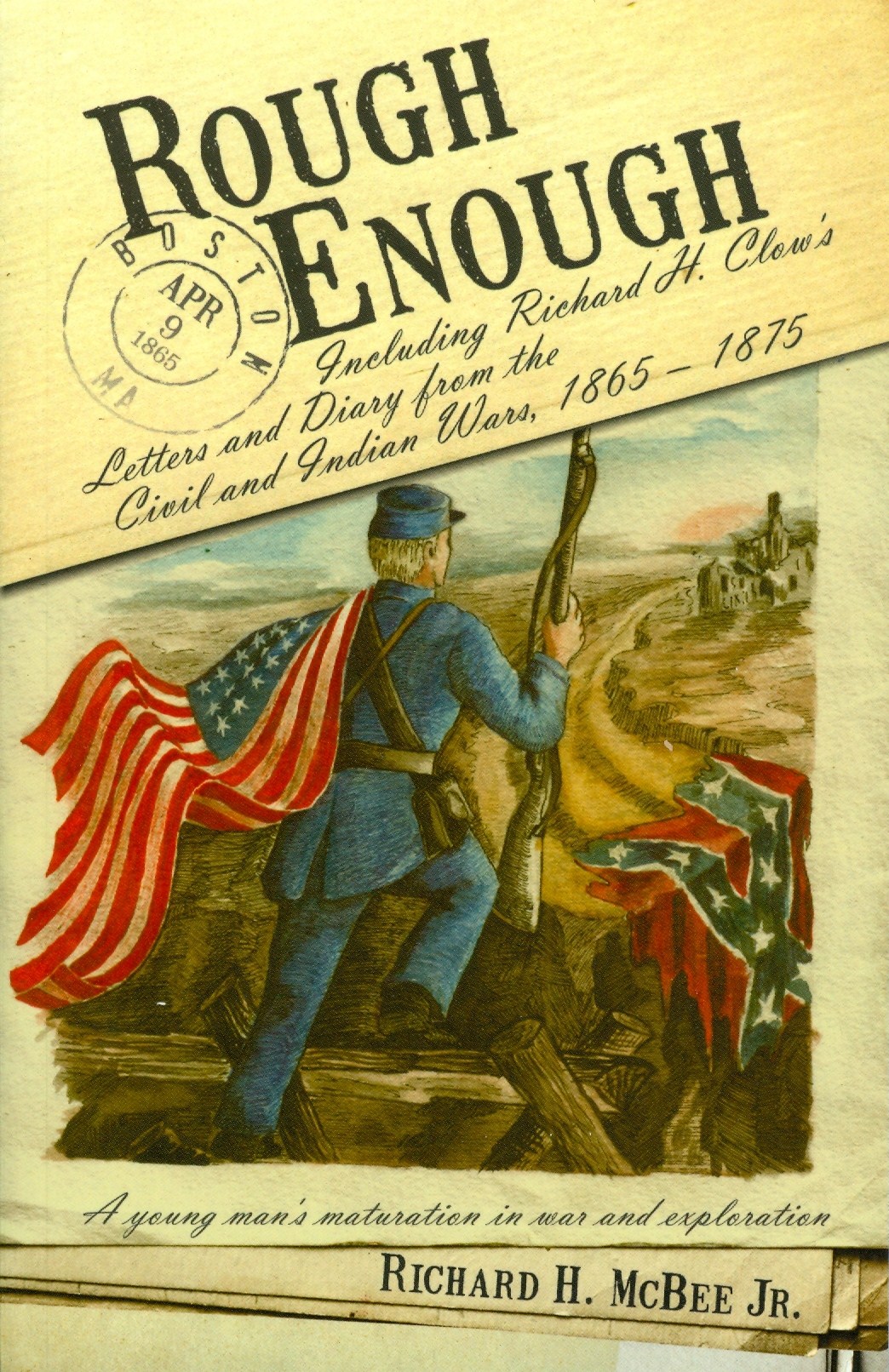
I had an absolutely Great visit to St. Louis, MO this past week to speak on my book, Rough Enough.
The saga of Richard Clow’s Civil War and Frontier life hit two large groups of extremely supportive history buffs at the U.S. Grant Historical Society www.nps.gov/ulsg in a talk sponsored by the Fontbonne University Book Club in St. Louis www.fontbonne.edu/infocenter/quickfacts/bookclub.
The Book club is associated with the CBS Radio Station, KMOX and sponsored by KMOX’s own guru of the airways, Charlie Brennan stlouis.cbslocal.com/…kmox-charlie-brennan-book-of…club.
In addition, the Military History Club at the Missouri Athletic Club(MAC) www.mac-stl.org/…/Military-History-Club.aspx gave me a resounding welcome for two talks: first at a luncheon talk inside the Down Town MAC followed by a super evening meal with the club at their monthly sit-down dinner event at the MAC West! Associated with this latter event was a Military History expert and student of Civil War History, David J. Newmann who demonstrated the loading and use of the British Enfield. This was most commonly used by the Confederate troops as they had a British war connection for supplies and was the British Pattern 1853 Enfield. This was a long barreled, three-band, single-shot, muzzle-loading, cap-primed, rifle musket.
It was a great two day event. More on the dynamic interview style of KMOX’s dynamic Charlie Brennan, the Military HIstory Club at the MAC and the U.S. Grant Site in later blogs! Enjoy!
Book SEOing: (Search Engine Optimization) for “Rough Enough”
I was run aground with ideas for ways of getting my book information out on the web!
Much like this 1913 postcard owned by the McBee family files , which was taken by my great grandfather, Richard H. Clow, of the Ship Anvil stranded on the Jetty off Florence Oregon in 1913!

Then I took a three day set of classes offered by John Ellis of <SEOWiSE.co> at the Willamette Writer’s Conference.
It was all about Search Engine Optimization on the web using key words that will associate you with the right terms, correct resources and other blogs to get you the most exposure possible!>)) WOW!
So how does this apply to my nonfiction book: Rough Enough? http://www.amazon.com/author/rickmcbee
Well, if nobody knows that Richard H. McBee Jr. published the book because they can’t find his name among a dozen other Richard McBee’s, on Google, then, it’s pretty unlikely that anyone is going to ever run across the book in Googling that name. Likewise, if the short title of the book, Rough Enough doesn’t come up when someone Googles some key words like: Civil War Diary, or Civil War Sagas, or Fort Buford, ND ……. You get the gist: WHO IS EVER GOING TO FIND ME! Even at:
http://www.barnesandnoble.com/w/rough-enough-richard-mcbee/1114682075
Depressing thought for an author : Buried under 100,000 other titles”?
So, SEO and John Ellis’s ideas, recommendations and tools look like a Light at the end of a long dark tunnel.
My first task: Decide on which Search Engine Words to Use!
Then to publish more Blogs on Rough Enough, and my other book Kalahari, and my current non fiction writings on Seashells and my fiction writing on Drug Wars. Thus gaining Control of some key web space not already occupied by a Guru of incomparable STRENGTH.
Thus I will gain my Power! Now! Off to my Google + account! Awayyyyyy:>)))
More later from Rick McBee, aka Kalahari Rick!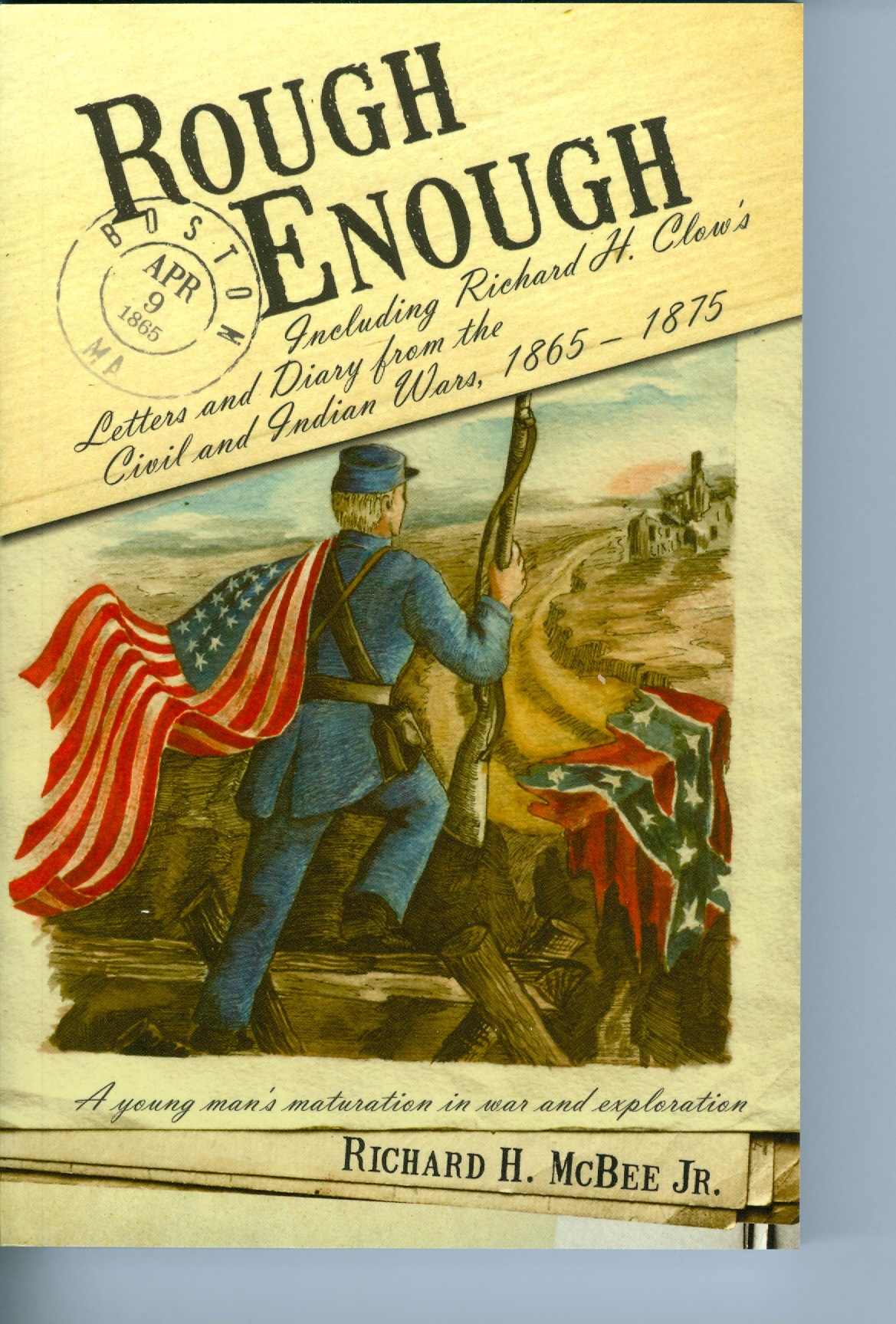
Reader Questions for “Rough Enough” Set#11, Chapt 8: What Modern Spectacles compare to the Civil War Grand Review?

As I look at pictures of the Grand Review in Washington DC following the end of the Civil War, I try to imagine what it must have been like to be either in the crowds watching on that day or on the stands, in the windows, on the roof-tops and in the side streets as The Grand Army of the Potomac paraded down Pennsylvania Avenue 12 abreast. Eighty thousand men passing in review! Wow what a spectacle to have been a part of. What went through the minds of Richard Clow and those people on that day!
Then the next day we have the encore of Sherman’s Army of Georgia, some sixty-five thousand men strong parading with horses, bands, and flourishes, not to be outdone by the previous day’s hoopla! And in this group is Richard’s brother, John Sherwin Clow probably thinking the same kinds of thoughts as those men of the previous day.
I have never been in that kind of a mass of humans during my entire life. I’ve been crowded and nearly squeezed to death in the masses of humanity celebrating in the city square in Munich during Oktoberfest, but I don’t think those numbers of humans were more than a five thousand. I’ve been in massive stadiums with over twenty thousand people at once, I’ve seen parades personally in Europe, Africa and the Americas in which thousands watched and thousands marched to honor presidents, mourn state funerals, celebrate religious festivals and show off military might, but I don’t think even the armies and funerals gave us numbers like the Grand Review. In fact, in several cases I felt almost claustrophobic and lost in the waves of humanity around me when I couldn’t see a way out of the crush!
What giant human gatherings have you participated in during your life that would compare to the Grand Review? I don’t mean watched on TV, I mean been in with the mob! Were they military? religious? athletic? How did you feel? Were you ever in a part of the mass where you knew you were completely at the whim of the movement of the mob? What feelings go through your mind when that happens?
Review: Michael Crichton’s book Airframe
Crichton has a true best seller here that holds the attention all the way through the 400+ pages.
I like the fact that his protagonist is a gutsy lady who is working with a bunch of engineers in an aircraft plant. She knows how to hold her own and that takes a lot when you know how engineers manage their interpersonal relations and staff.
I like the portrayal of the television media for what many of them are; vampires for the latest blood and gore, willing to sacrifice the real explanation of a complex problem for the simple answer which brings off the instantaneous hype in 30 second bytes.
The story line is fleshed out with a few side trips to examine our heroine’s family life and extra curricular bedtime, but not so much that it detracts from a really great story about how we view airplane disasters, how little we as the general public really know about keeping a million pounds of steel in the air for 12 hours at a time and how blase’ we have become about safe comfortable aircraft travel.
The behind the scenes plant operations, the union actions and the administrative infighting for power are straight out of the jungle of human relations. I love the way Casey is finally able to turn the tables on the unscrupulous duo of Marder and Richman. We’ll miss tha fact that Crichton is no longer with us and able to continue to stimulate our imaginations to such a high degree.
I didn’t put the book down for the last 200 pages despite the dishes piling up and the dog scratching at the door. Read the first half in bits to absorb the data and then save the last half for when you have a real chance to break away and complete it in one marathon sitting!
Book Review: Harlan Coben’s “The Final Detail”
I love a book that starts off with a first sentence that is like a three pronged hook that just reaches out and grabs you and leaves you flopping like a carp on the line. Where else but in a Harlan Coben book do you get as starter like this: “Myron lay sprawled next to a knee-knockingly gorgeous brunette clad only in a Class-B-felony bikini….” You got me even though she really didn’t have a lot to do with the murder!
Then I love the hulk-sized lady wrestler, Big Cyndi, who is big, tough, ugly as sin, yet smart enough to save all Myron’s info when the cops snag his computers. What a gal, faithful and willing to act as backup if Myron doesn’t have his alter-ego Win available.
Esmeralda is innocent from the start, Myron knows it, Big Cyndi knows it, yet she’s framed so completely that it really looks like she’s going to get fried for the murder of Myron’s baseball pitching client, Clu Haide. As a tag-team wrestling partner with Big Cyndi she can take care of herself.
Now the real character who kind of sends chills down your back is Myron’s alter-ego friend, Win. A man rich enough to find a guy hiding out in the Caribbean on a lonely island with the bikini girl. A guy who is passively aggressive to the point of your not knowing when he will take on the next couple of thugs in a pizza parlor, shoot up the town, intimidate a mobster, or just remove someone to clear the air a bit.
Coben has a knack for writing this kind of adventure, detective fiction and is well worth reading whether you are one a plane, at home or out with the lady in the B-Class felony bikini.
[[ASIN:1589827139 Rough Enough: Including Richard H. Clow’s Letters and Diary from the Civil and Indian Wars, 1865 – 1875]]
South Africa Book Group on Goodreads
.gr_grid_container { /* customize grid container div here. eg: width: 500px; */ } .gr_grid_book_container { /* customize book cover container div here */ float: left; width: 39px; height: 60px; padding: 0px 0px; overflow: hidden; }
 1557 members
This is a book club for all South Africans who love reading! We also have members from other coun...
Books we've read


View this group on Goodreads »
Share book reviews and ratings with South African Book Lovers, and even join a book club on Goodreads.

